Solutions

Brazed aluminum

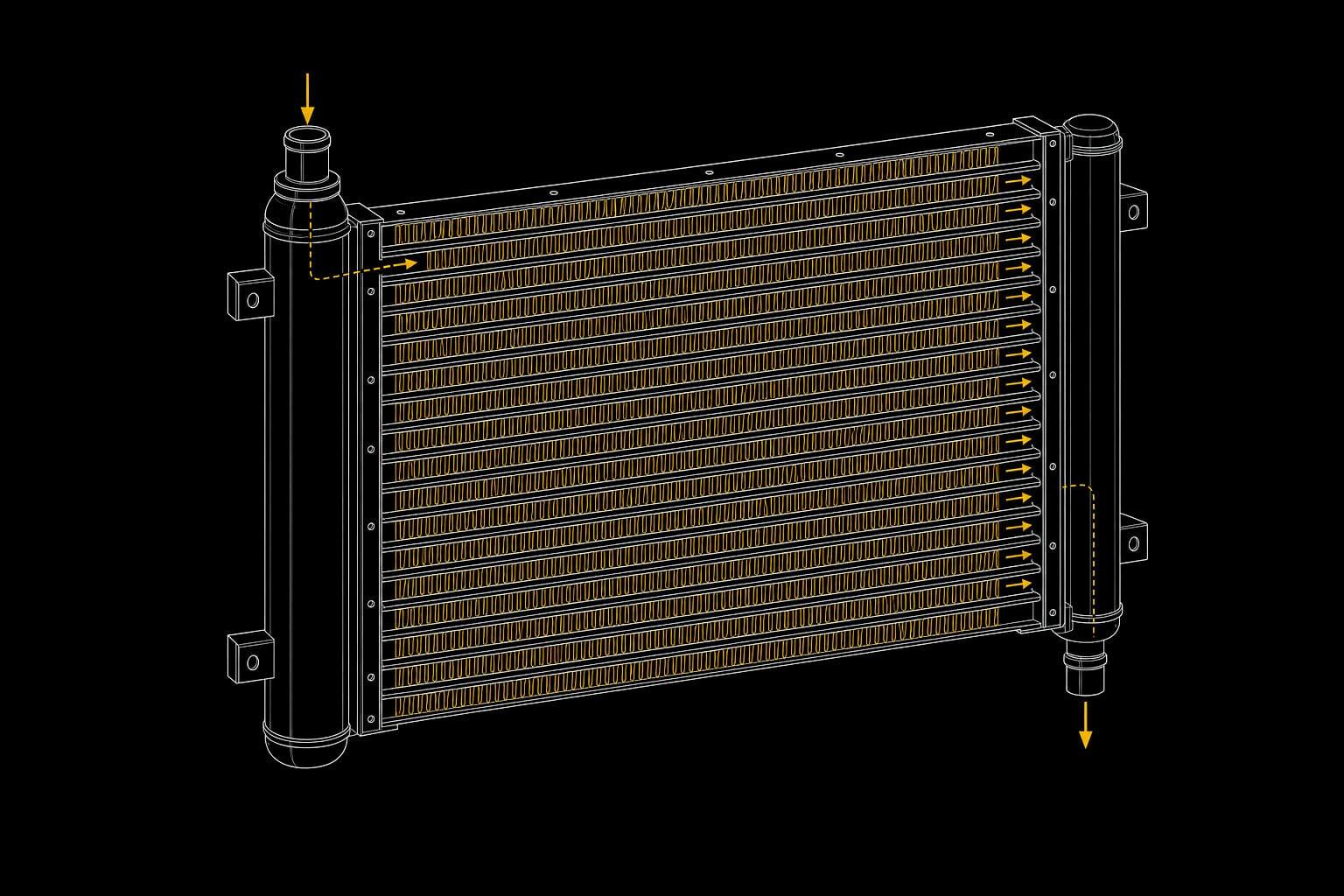
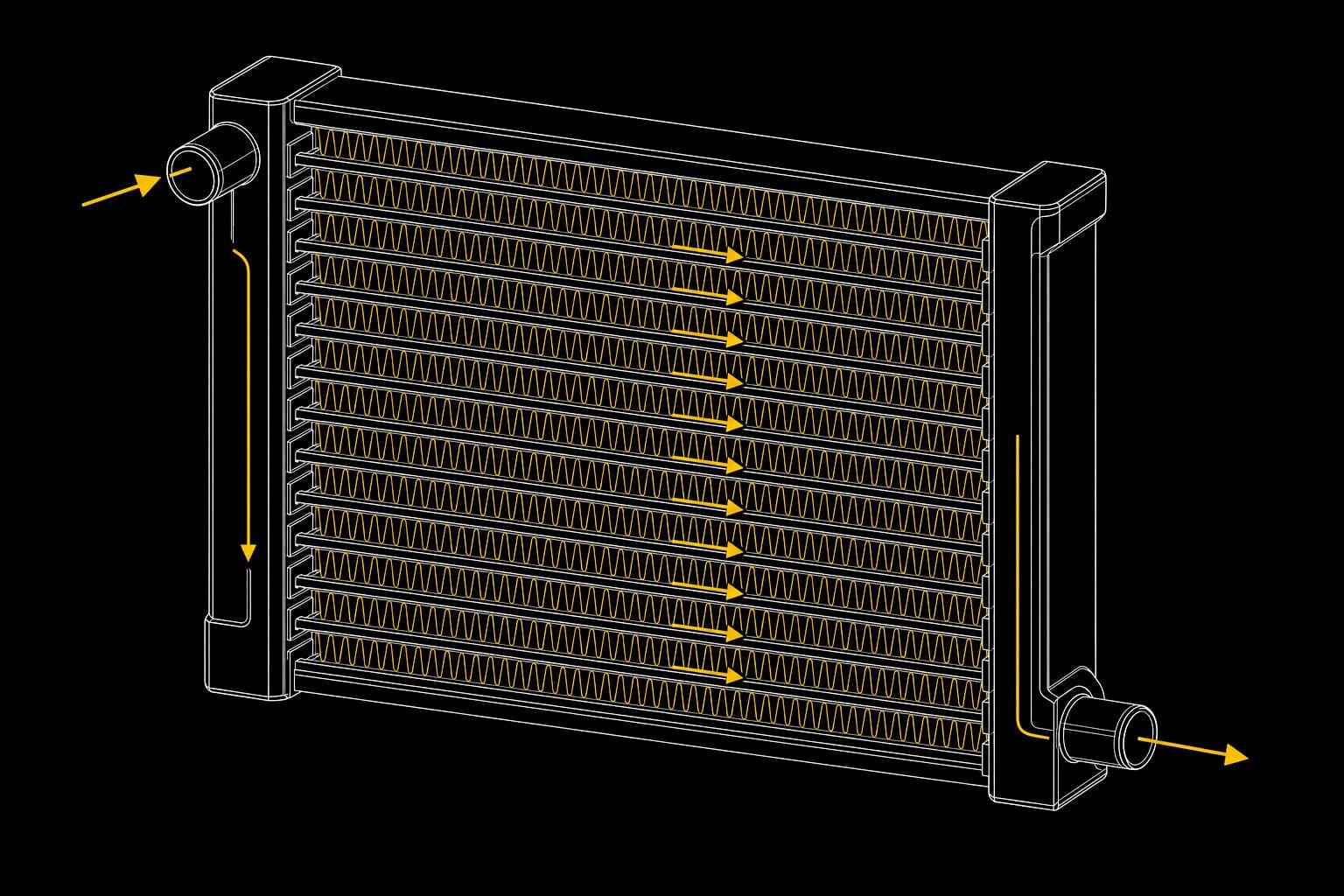
All-aluminum cores whose tubes, fins and headers are joined in a brazing furnace. It is the usual build for modern radiators and charge air coolers.
Brazed aluminum
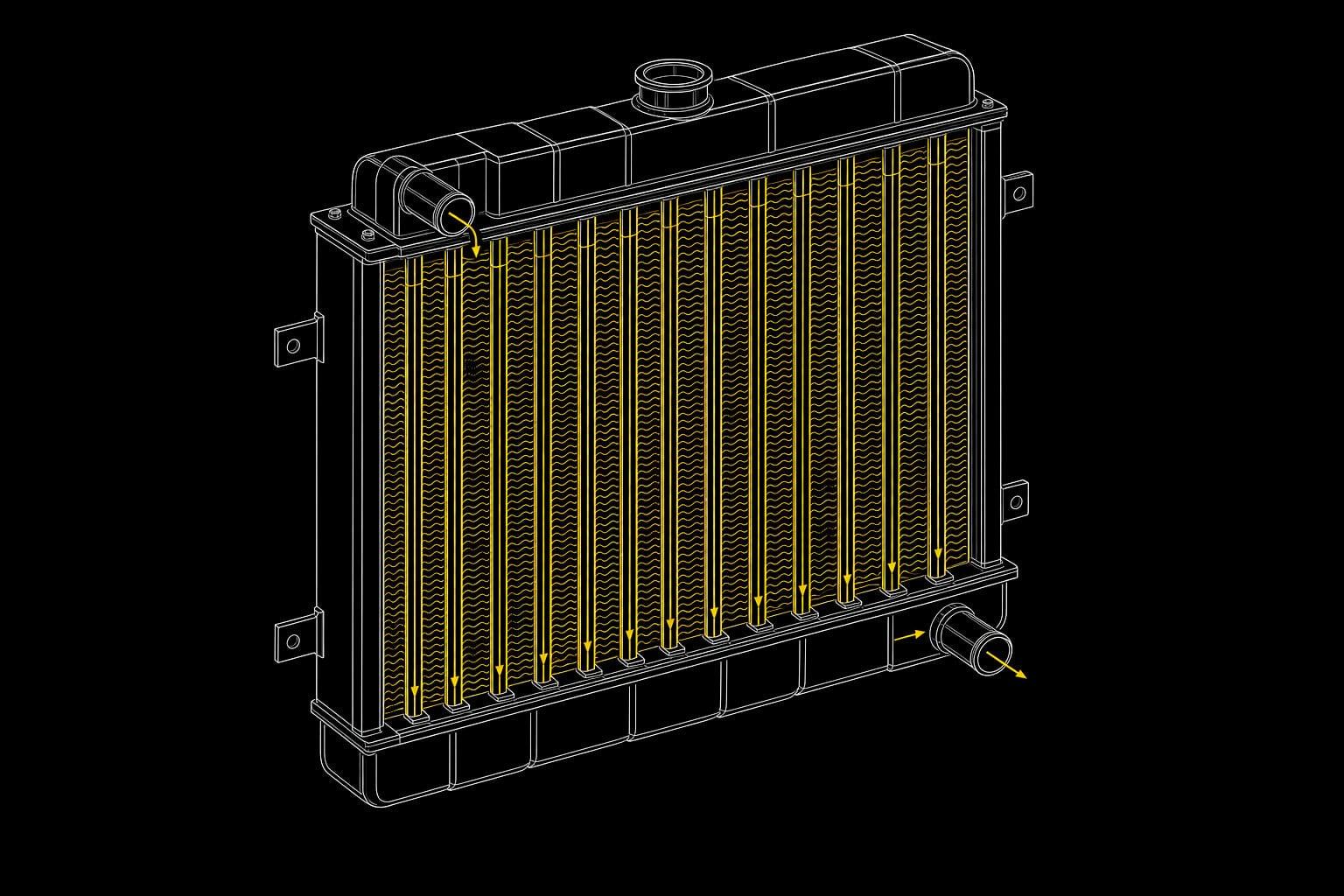
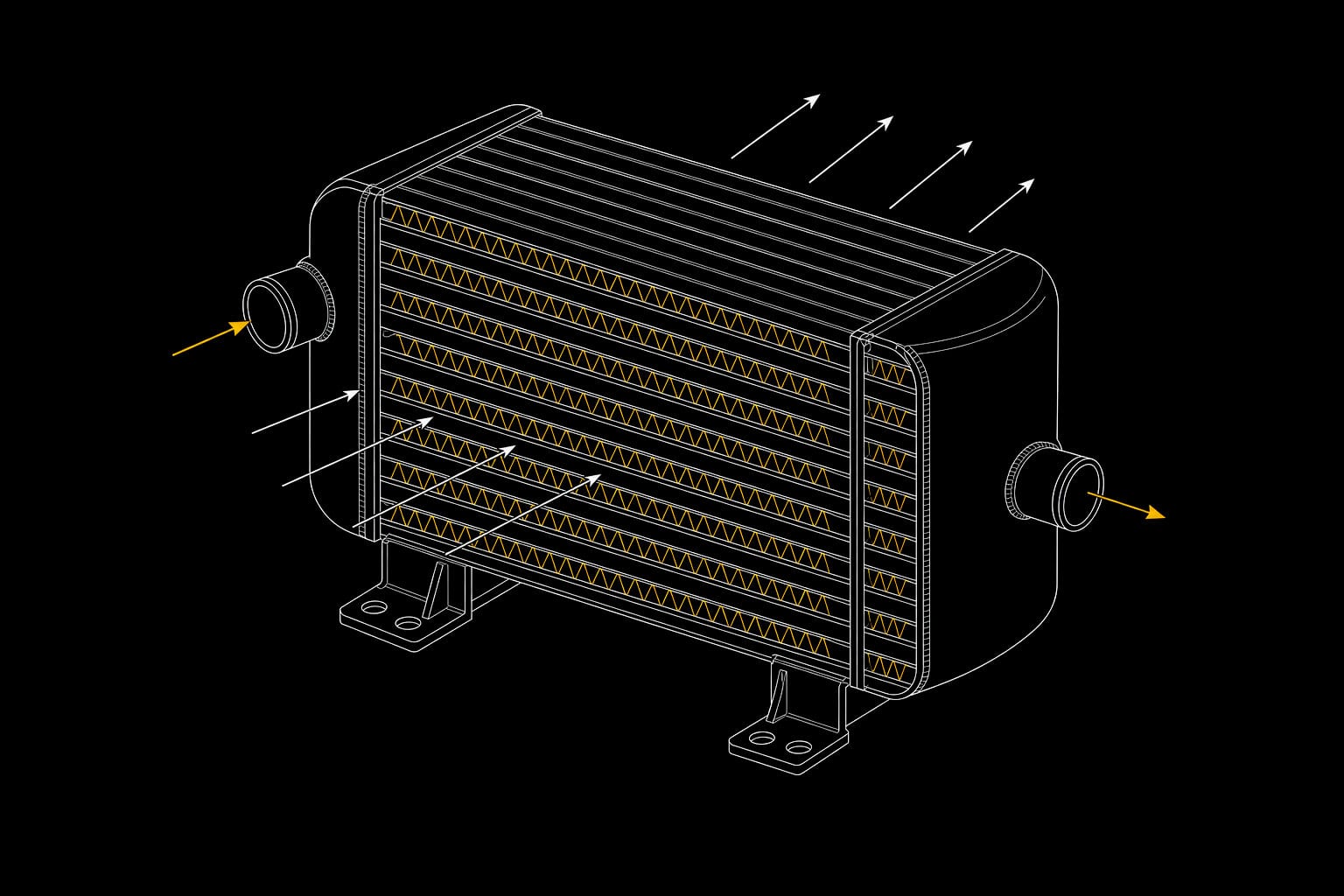
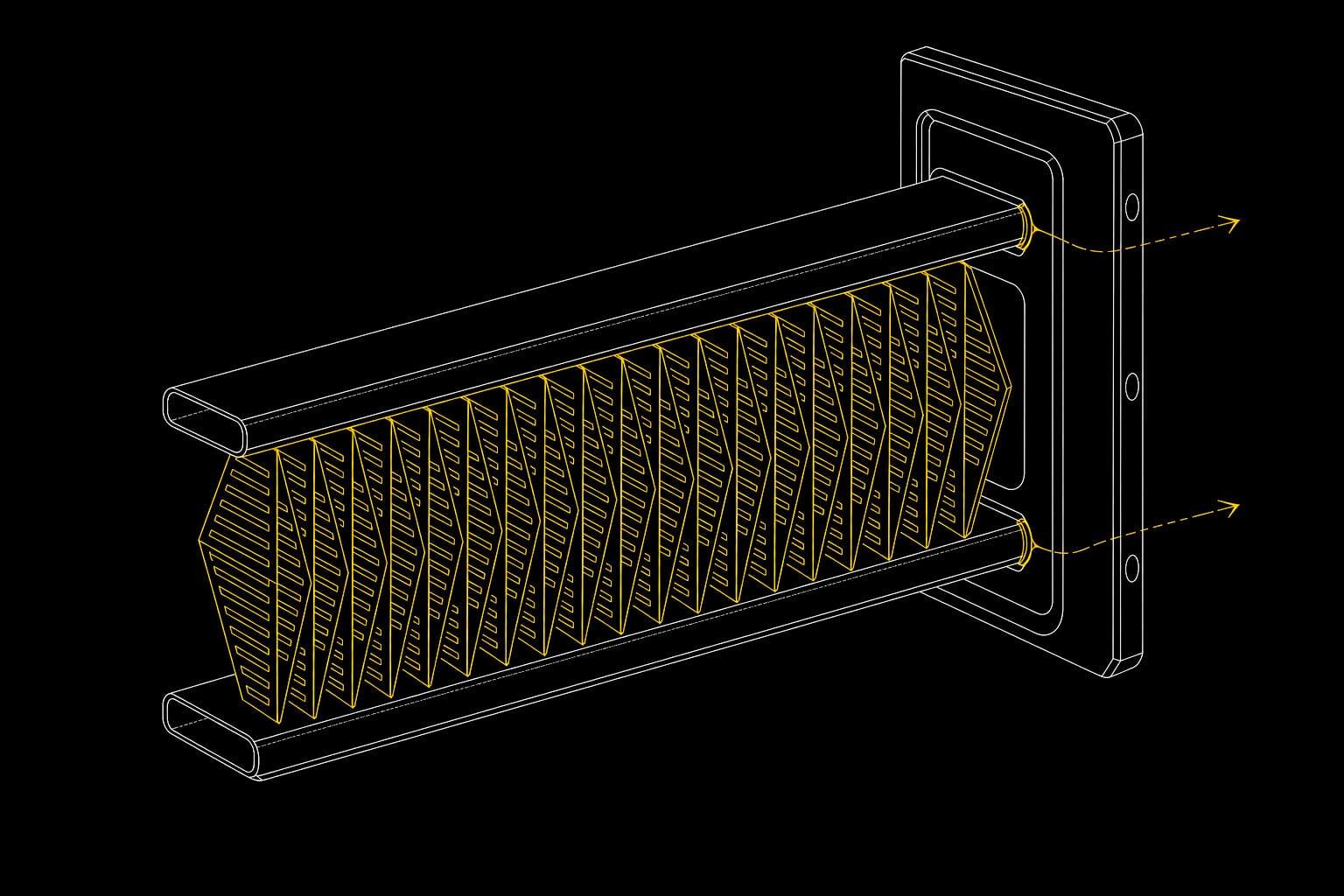
Cutaway of a brazed aluminum core: flat tubes, corrugated fins between them and the header, all in one piece.

How it is built

The parts come clad with a layer of filler alloy. The whole core is assembled and sent through the furnace, where every joint is brazed at once into a continuous metal bond. Tanks and connections are fitted afterwards.

Why it pays off

Much lighterAluminum is far less dense than copper and brass. For the same heat load the core weighs much less, which matters on mobile equipment and wherever the radiator hangs from a frame.
More heat per face areaFlat tubes and louvered fins keep breaking up the layer of still air that clings to the metal. That packs more heat transfer into the same radiator face.
No solder jointsBrazed joints withstand higher temperatures than soft solder. That makes it the natural choice for cooling the hot air coming off the turbocharger.
Single-metal coreTube, fin and header are all aluminum, so no galvanic couple forms between dissimilar metals inside the core.

Where it works best

  • Engine radiators on mobile equipment
  • Charge air coolers (intercoolers)
  • Engine and transmission oil coolers
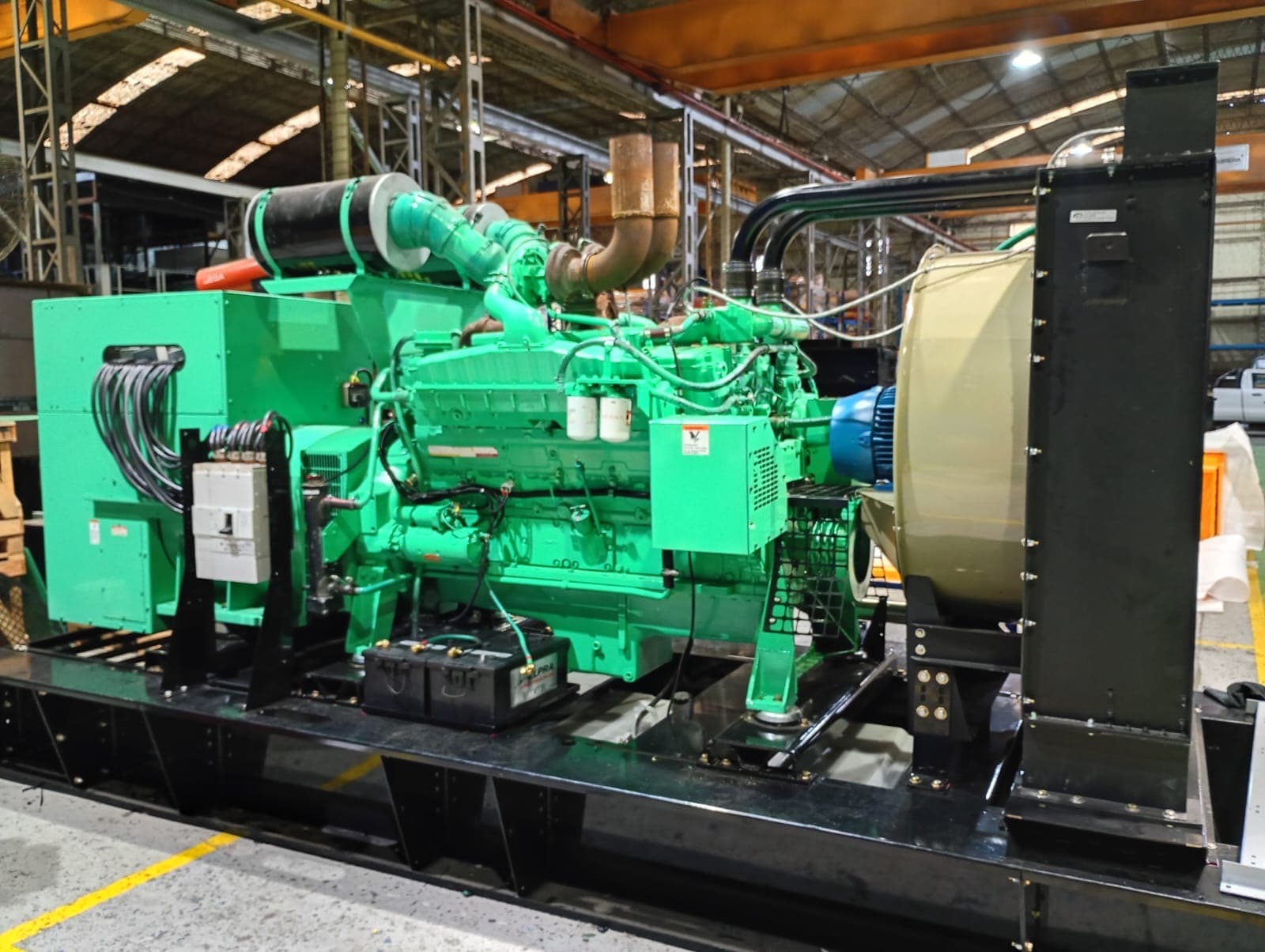
  • Generator sets where weight counts

When another one fits better

It cannot be field-repaired like a copper and brass core: a punctured tube needs special techniques or a new core. It requires coolant with aluminum-compatible inhibitors, and if your machine works in heavy dust or takes stone strikes, a sturdier build is a better fit.

Units built with this technology

Real data sheets from our technical office.

Radiator for John Deere 6068T
Engine
John Deere 6068T
Power
109 kW
Cools
Jacket water
Material
Brazed aluminium
Quote one like this

Is this the
one you need?

Tell us the equipment and the conditions. A plant engineer gets back to you.WhatsApp +54 9 342 635-6566