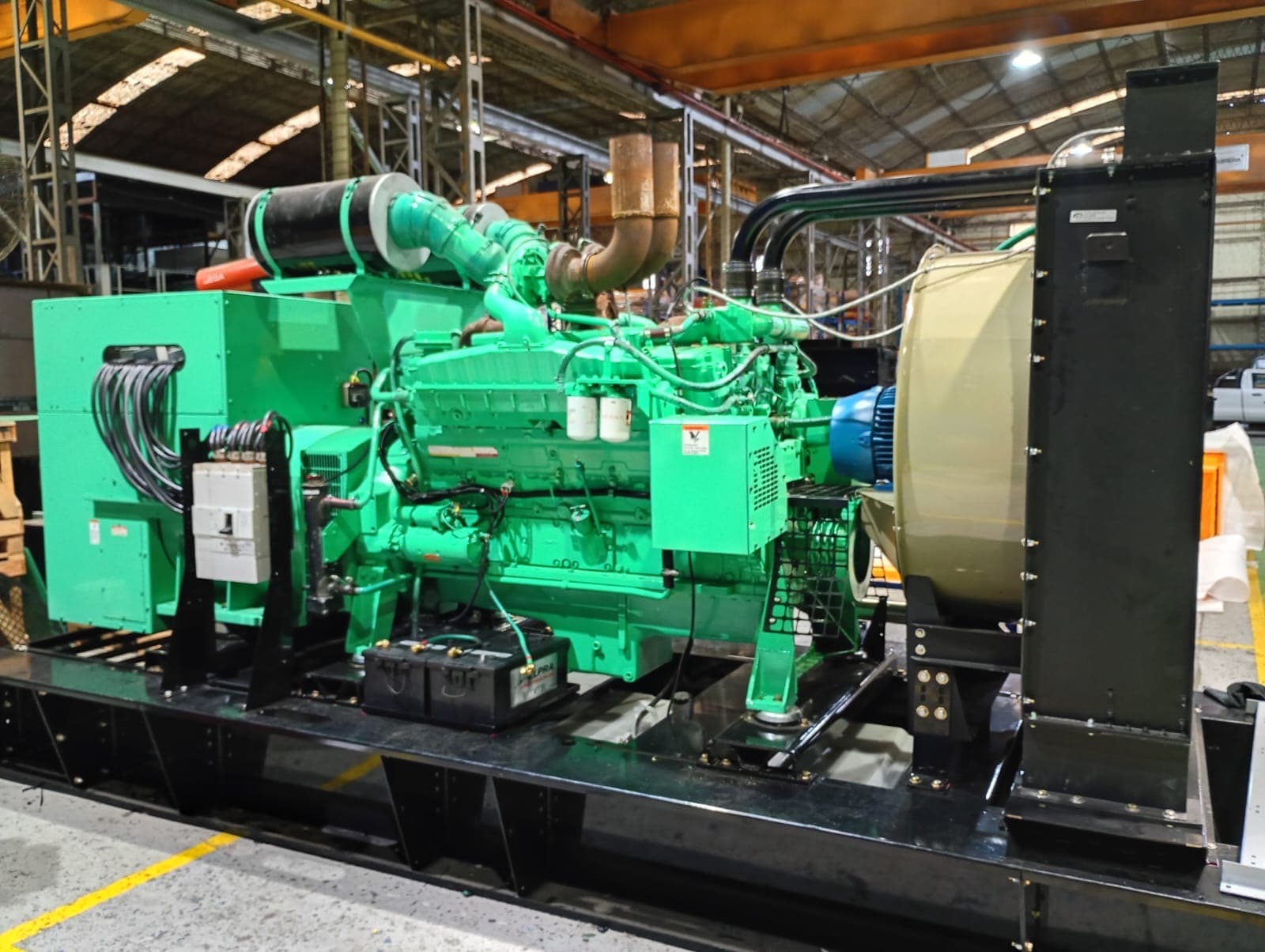

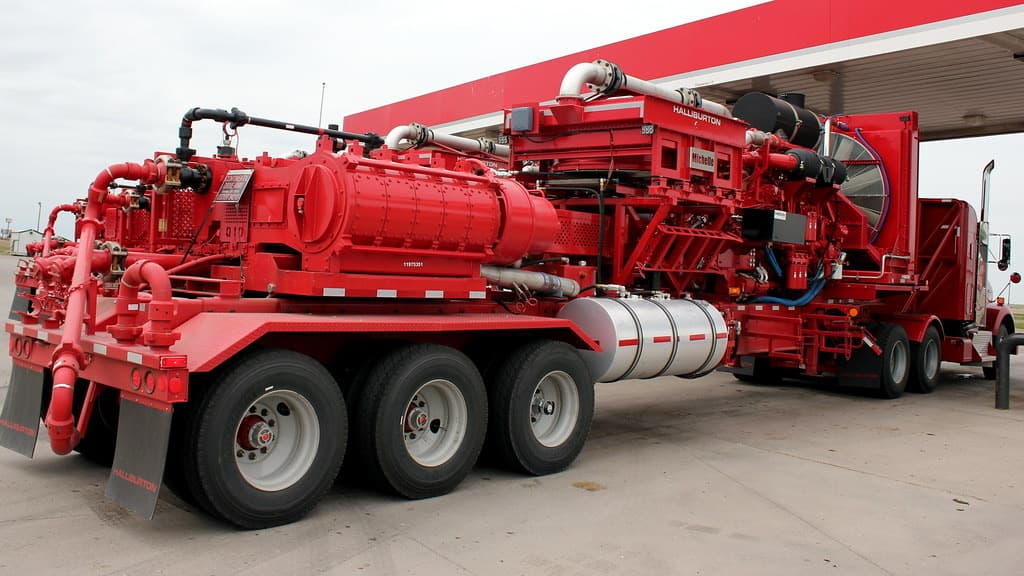
Radiator for Cummins QST30
- Engine
- Cummins QST30
- Power
- 970 kW
- Cools
- Jacket water
- Material
- Copper and bronze

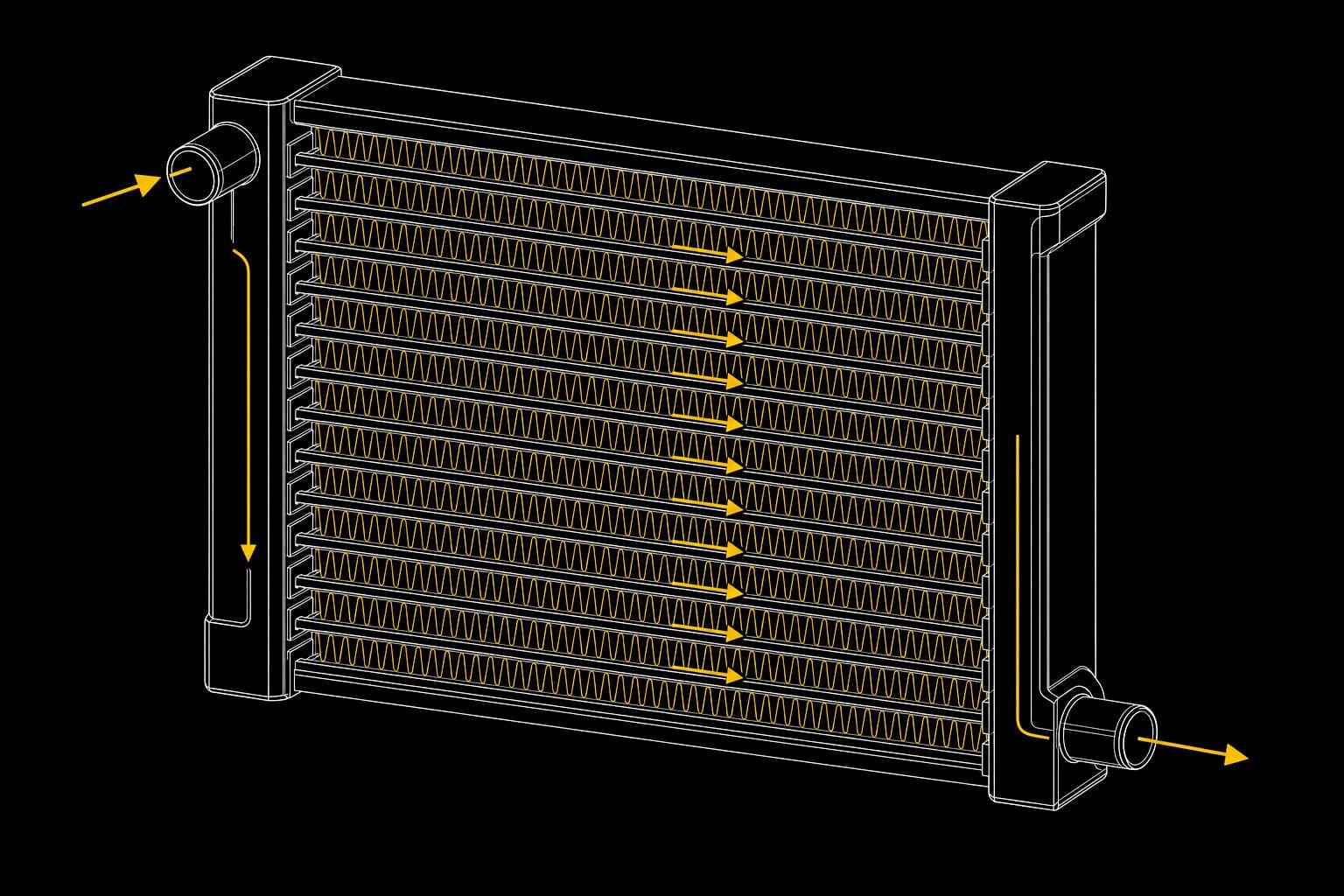
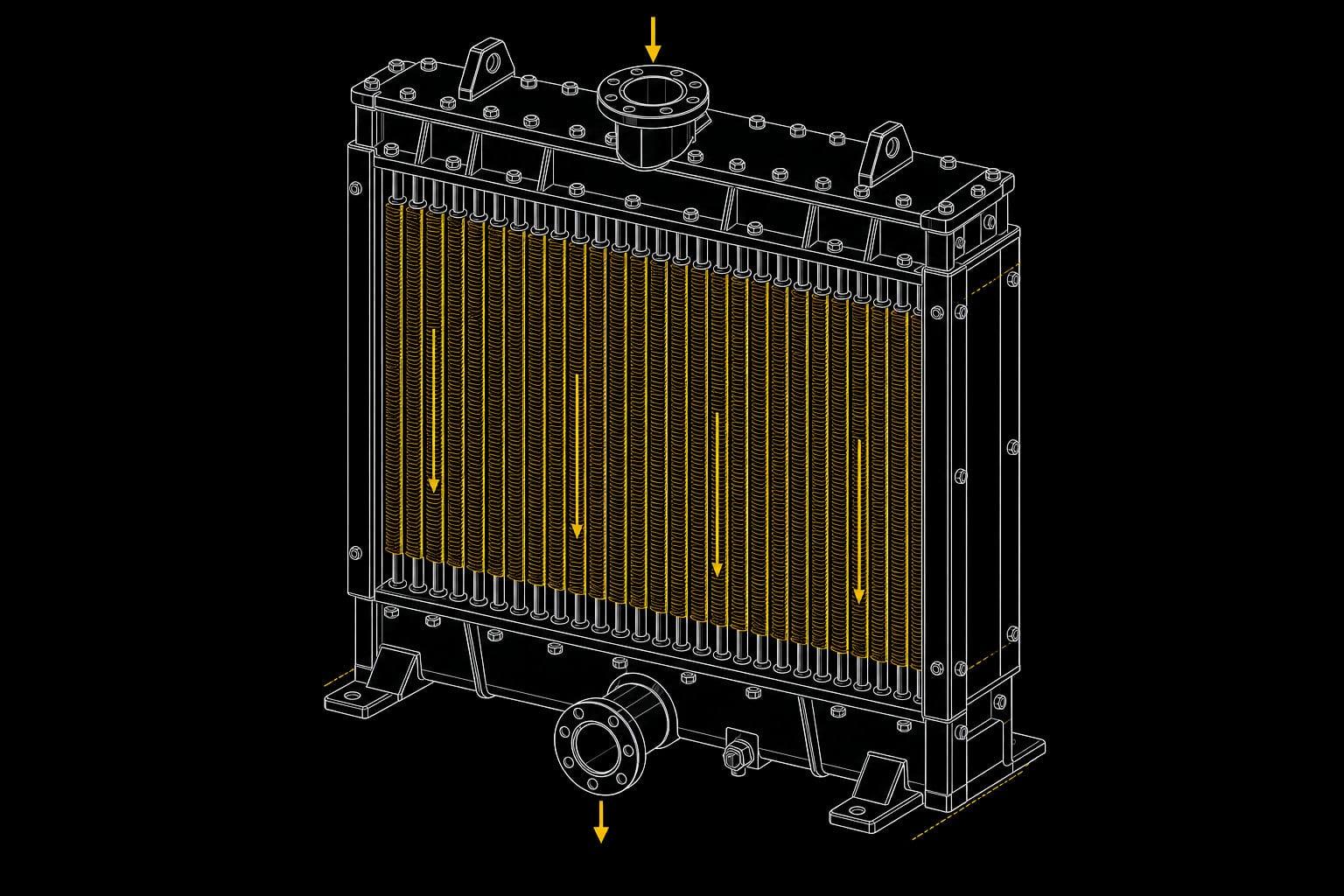
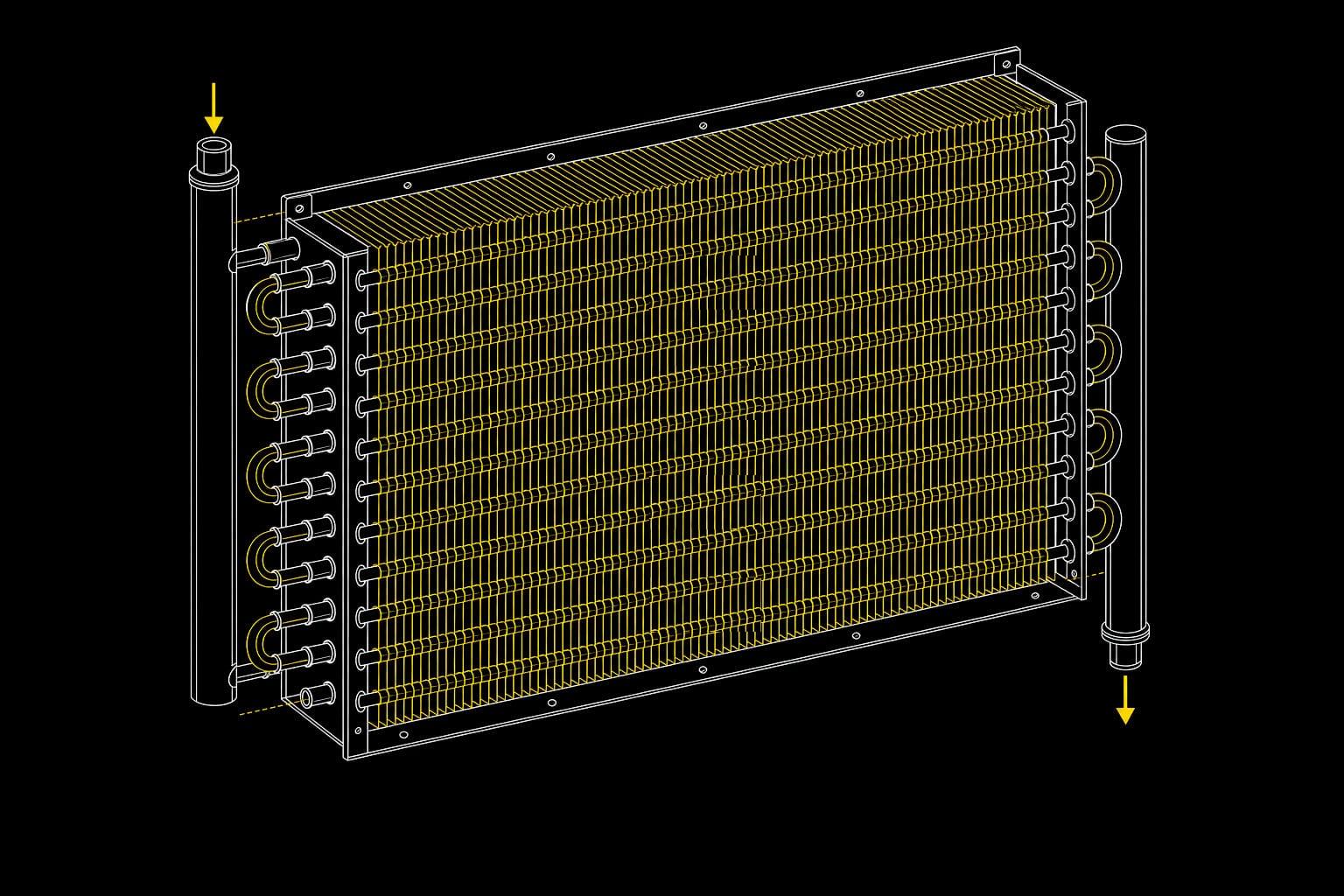
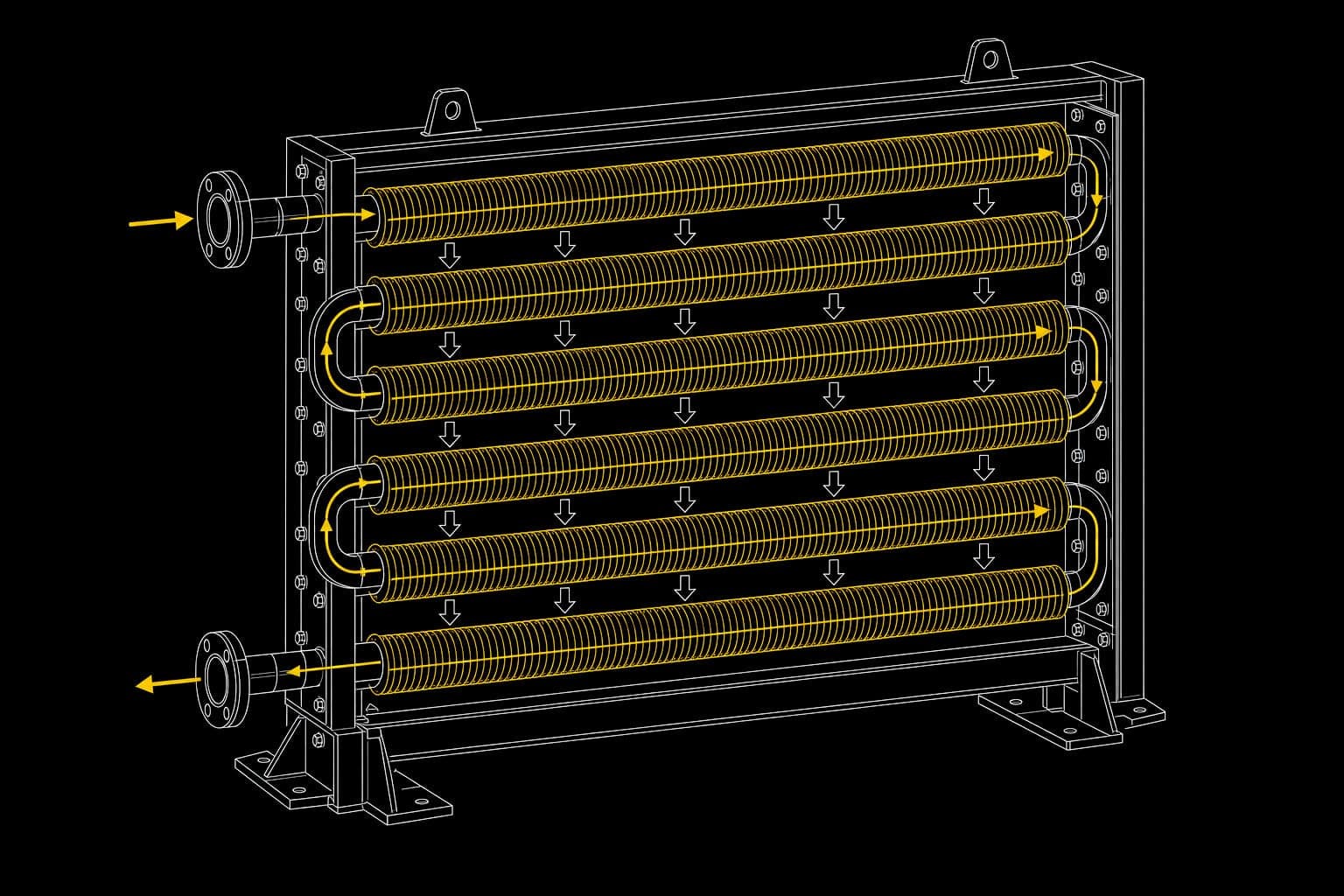
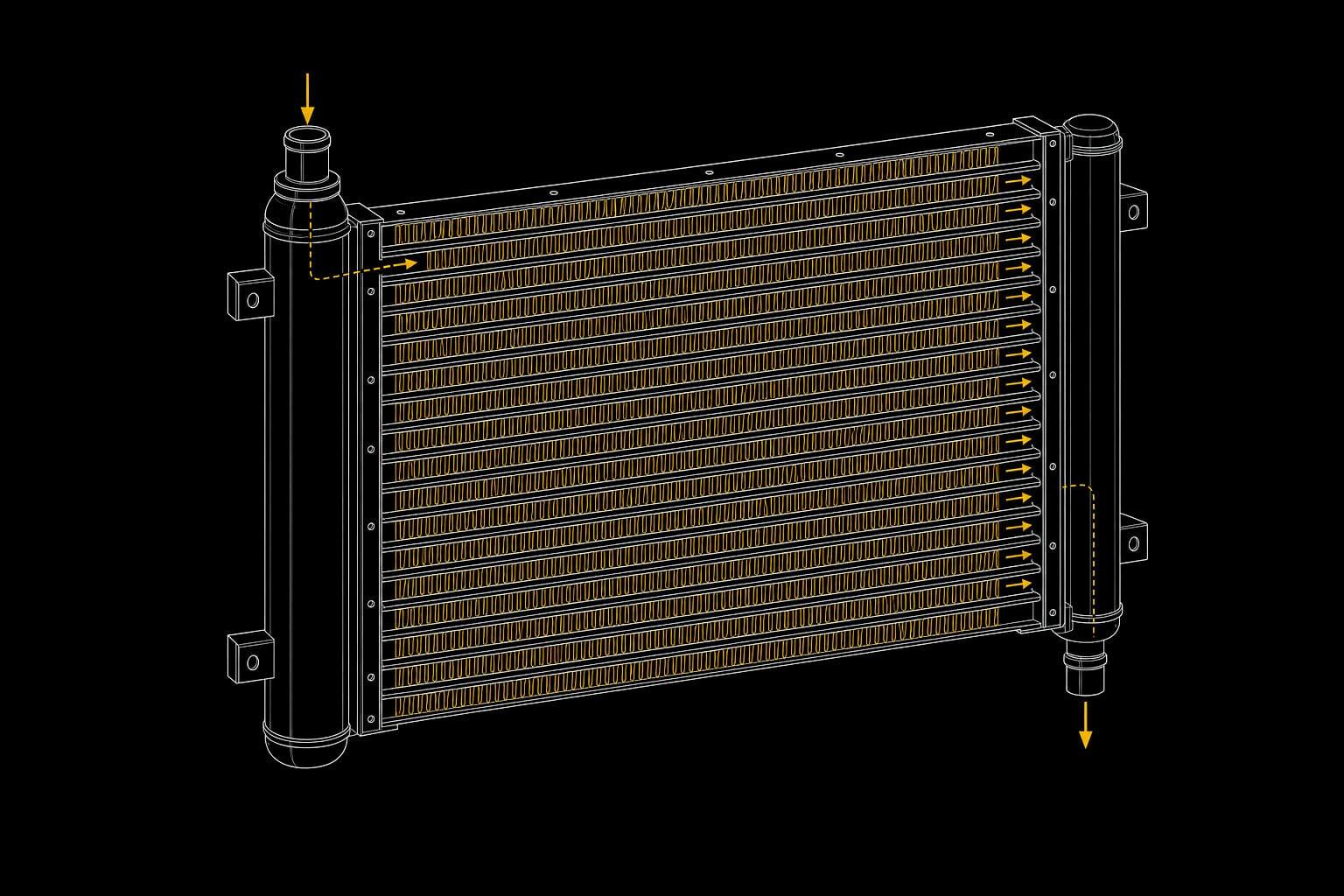
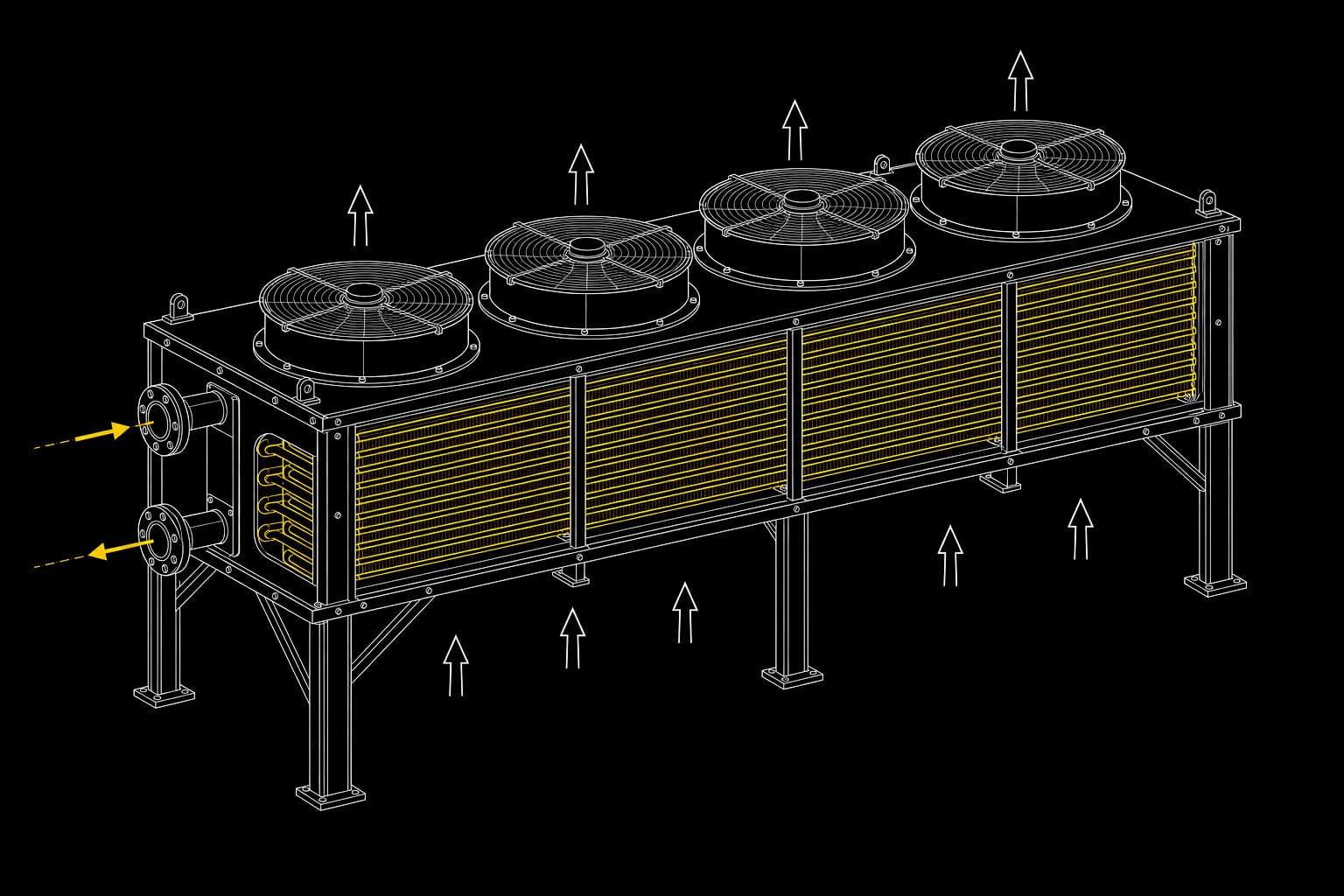
Radiator cores with brass tubes and copper fins, joined by soft soldering. It is the classic engine radiator build, and it still makes sense wherever being able to repair it matters.
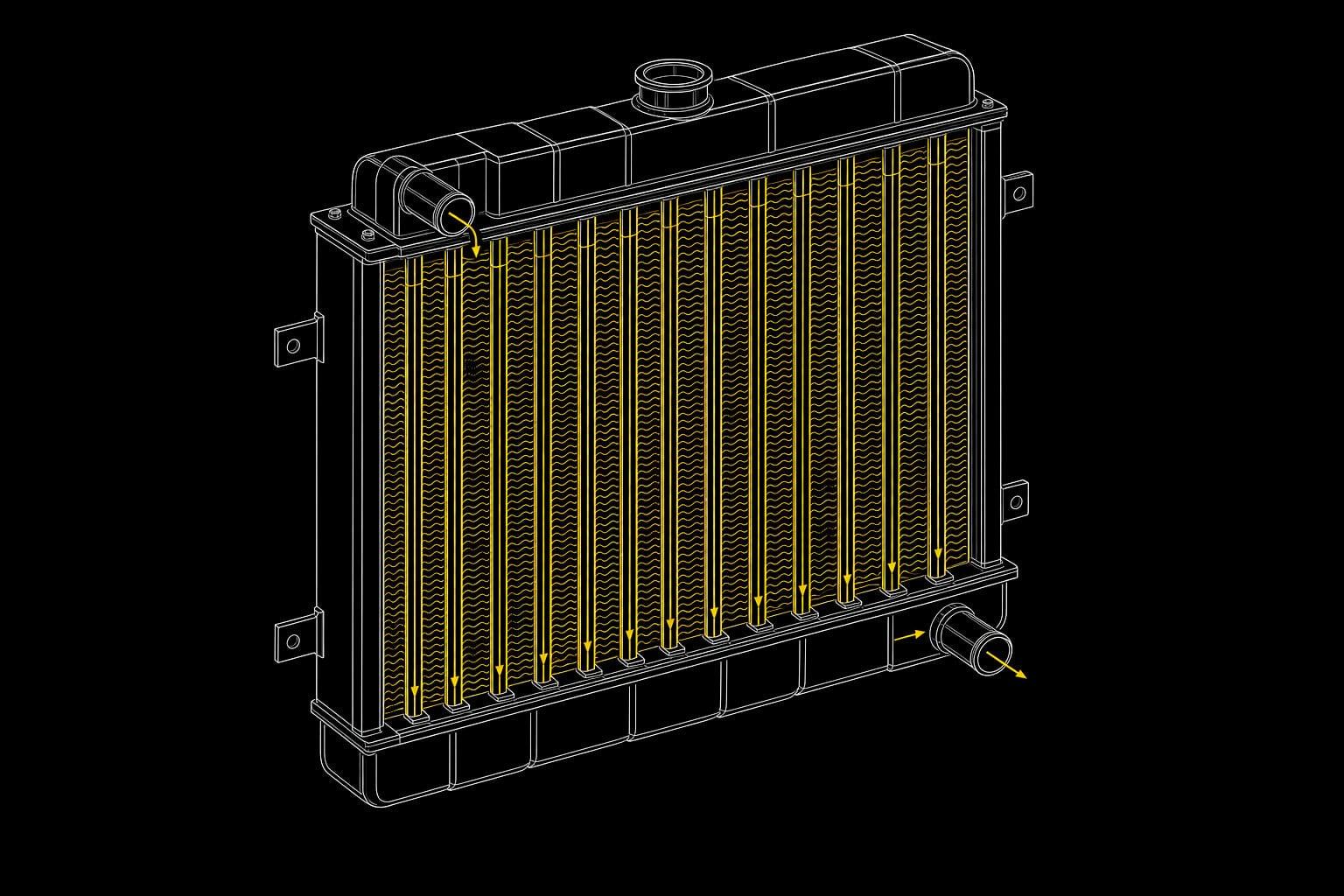
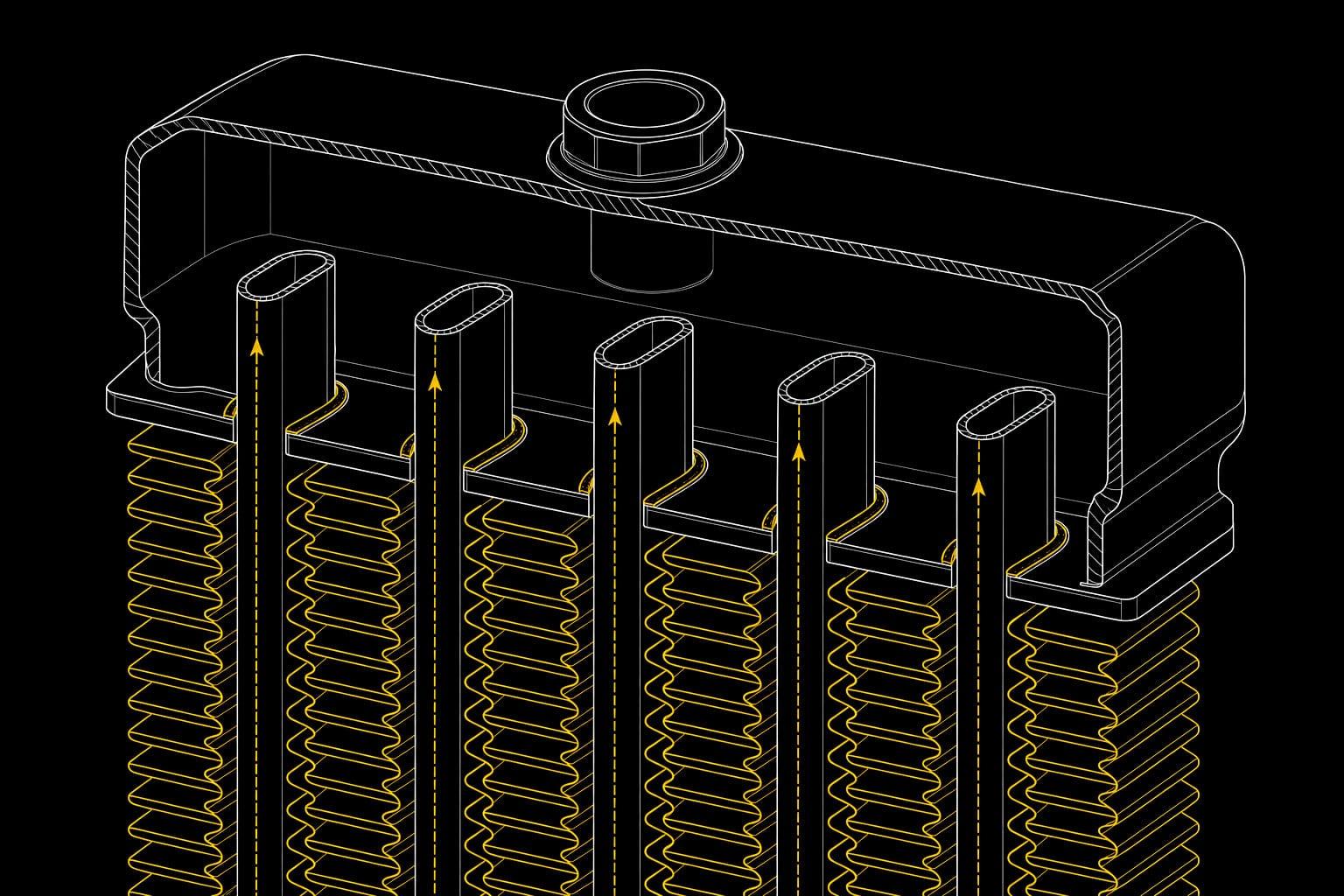
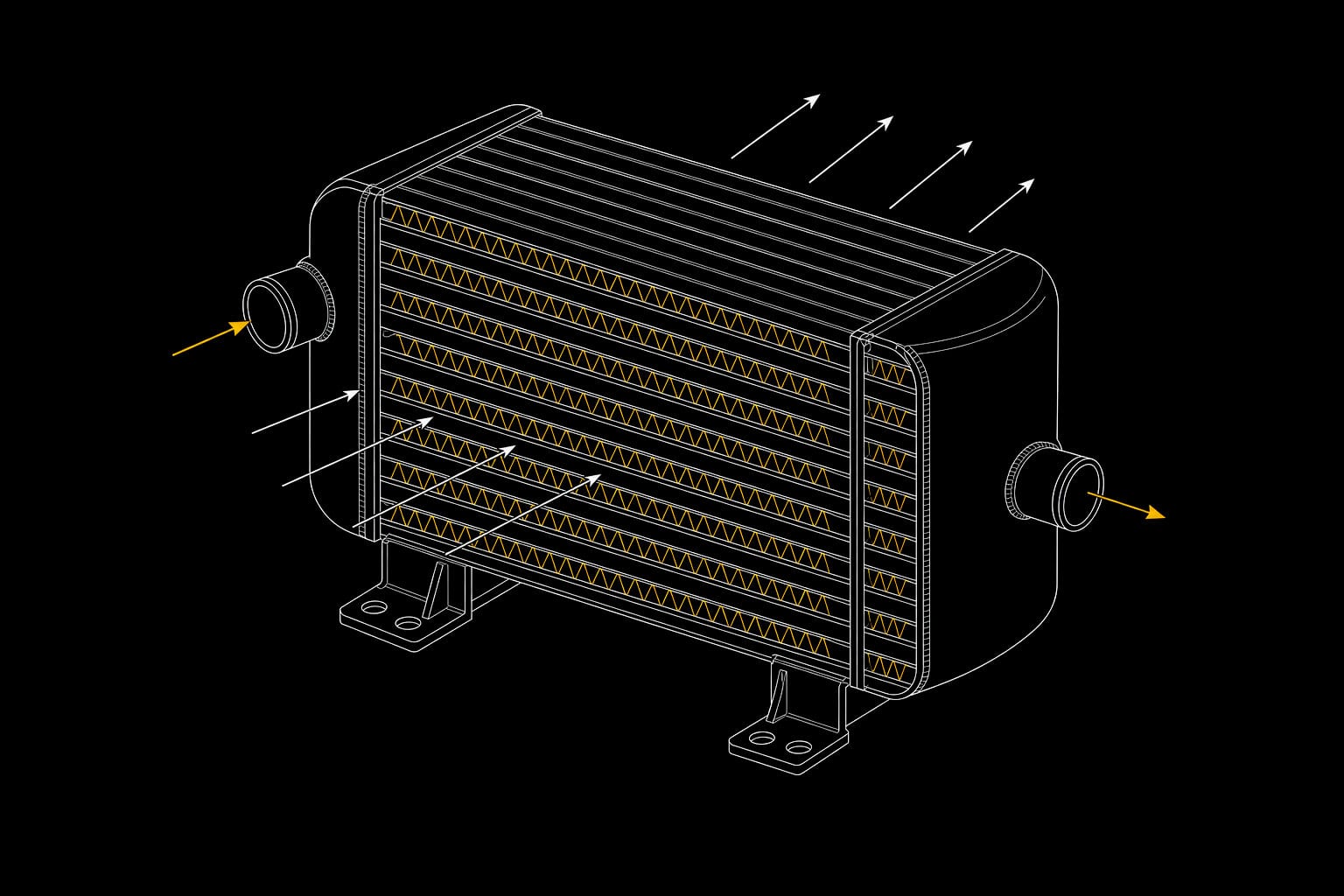
The brass tubes run through a pack of copper fins and are tin-soldered to the header plates at each end. The fins are soldered to the tubes too, so heat moves metal to metal with no mechanical joints. The inlet and outlet tanks sit on the header plates.
It weighs more than an aluminum core of the same capacity, and copper costs more. Tin-soldered joints lose strength as temperature rises: for very hot charge air, brazed aluminum or bar and plate is the better choice.
Real data sheets from our technical office.
Tell us the equipment and the conditions. A plant engineer gets back to you.WhatsApp +54 9 342 635-6566